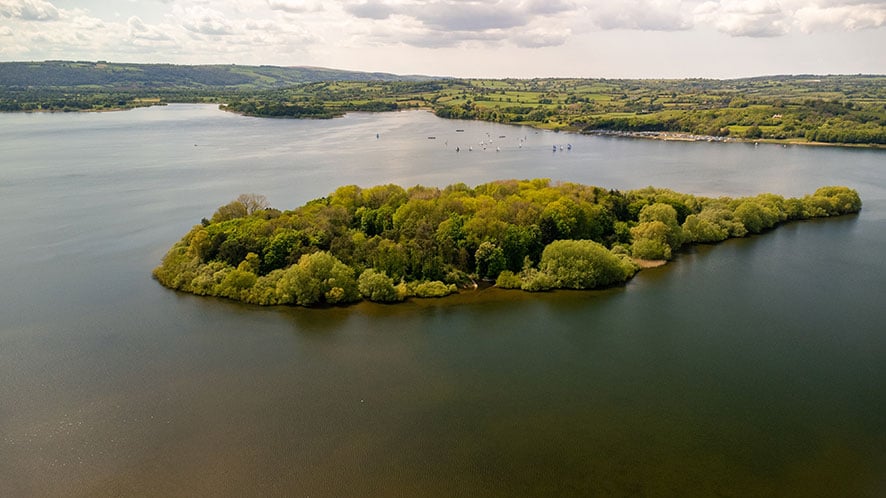
Building more reservoirs has been a hot topic this summer. As much of the nation entered drought and hosepipe bans were introduced, many customers raised building reservoirs as a solution.
We look at some of the challenges and opportunities around building new reservoirs.
Being strategic about water
We make detailed plans to understand future water resource needs. We look at things like population growth and climate change along with water efficiency, how much water is lost to leaks and whether the way we remove water from the natural environment could have any negative impacts.
Water is part of a complex and interconnected system that involves water companies, rivers, reservoirs, energy systems, farms, businesses and communities. Something that happens in one region can impact people in another area.
We plan strategically to consider new reservoirs along with other options that can improve the resilience of the network, such as pipelines to transfer water between regions, water recycling schemes and storage facilities that increase our reserves.
A national picture of reservoir building
It has been 30 years since a new reservoir was built in the UK. Making sure we have enough water for the future is a challenge for the whole country, not just our region. That is why a range of water-supply projects, including reservoirs, have been identified as priority projects to help speed up their delivery.
Building a reservoir is a major undertaking. It requires a large site with the right underlying soil and rock structures, and the right connections to rivers and roads so heavy machinery can access the site to build the reservoir.
Getting planning permission can take many years. The project must go through a number of important steps. These include assessing environmental impacts, gaining planning permission, working with regulators and landowners, and consulting with local communities. There is a lot of work to do before construction of the reservoir begins.
Our approach to new reservoirs
We’re committed to building a new reservoir in Cheddar that will have the capacity to supply 20 million litres of water to the South West region. This is one of nine proposed reservoirs planned across England by 2050.
The Cheddar 2 project is proceeding as fast as it can. It’s important that we take time to do all the environmental assessments, design testing, consultation and planning that are needed to make it a success.
We’re also exploring options at a regional level, including with neighbouring water companies as part of the West Country Water and Environment regional group.
Managing supply and demand
With fast-changing weather patterns, increasingly we’re seeing wetter winters and drier summers. We need to adapt to these changes by ensuring we can capture and store more water in the wetter seasons to see us through summer heatwaves.
Strategic reservoirs will be part of the solution to this challenge, alongside measures like reducing leakage, improving water efficiency and optimising network resources so we can move water between different areas.
Customer demand is an important piece of the puzzle. Currently, demand for water increases when it’s hot. If the heat is accompanied by long periods without rain, this can reduce our water reserves significantly. It really helps if customers use water wisely.
See our water-saving tips pages for suggestions of how to save water at home.