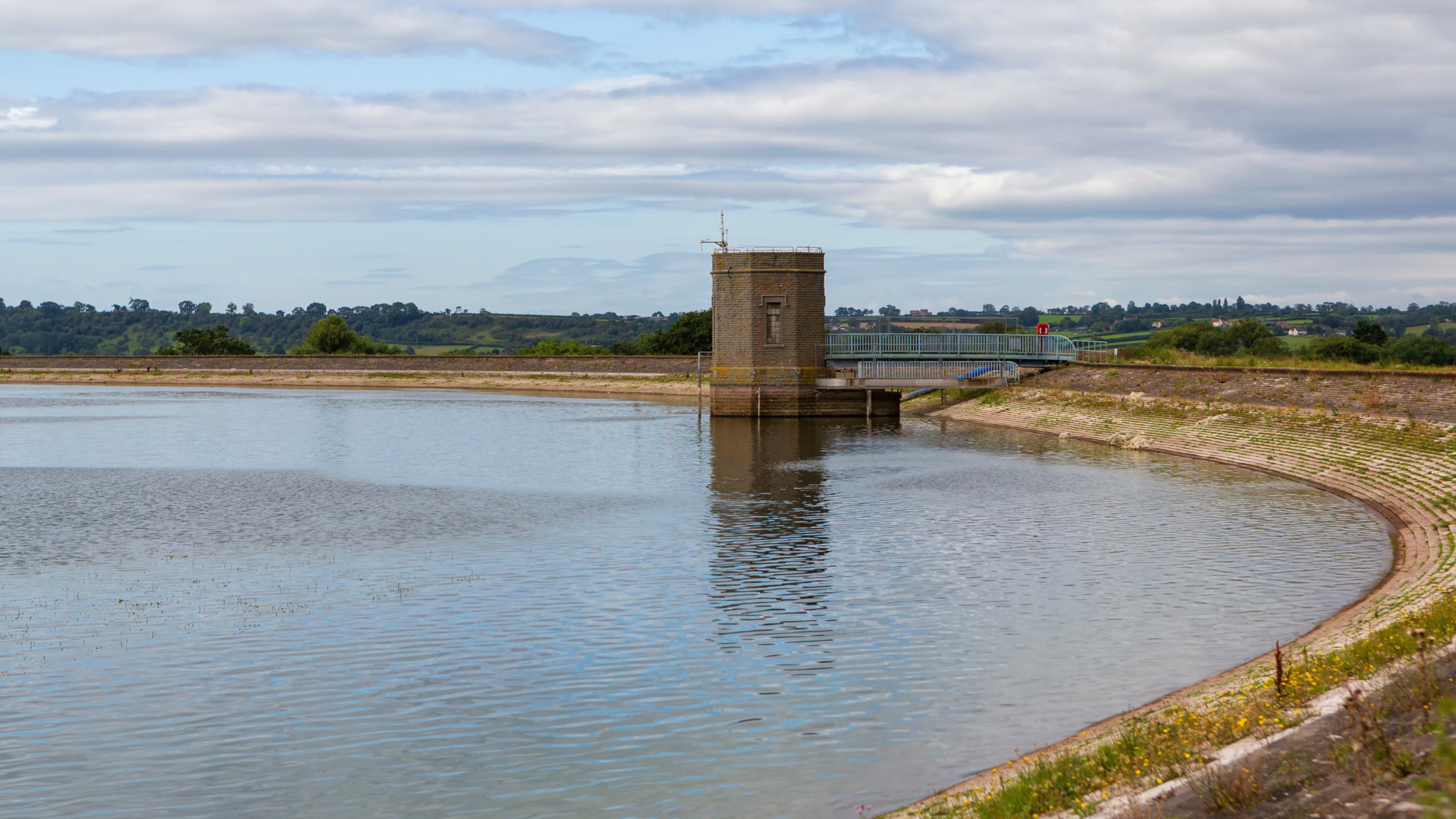
Bristol Water’s Senior Water Resources Manager, Paul Merchant, explains how short spells of rain are not enough to fill up our reservoirs after a dry, hot summer.
As wetter weather returns and autumn gets into full swing, many people may assume that reservoirs will quickly refill after the dry, hot summer and welcome rainfall. However, reservoir recovery is influenced by a range of factors beyond the amount of rain that falls.
Drought conditions continue across much of England. While some areas are expected to recover through the winter, the Environment Agency has said that parts of the country could remain in drought into spring 2027.
The region is experiencing the effects of an exceptionally prolonged period of dry weather and reservoirs and rivers have not received the rainfall they would normally rely on.
Where does our water come from?
Bristol Water uses a combination of water sources, including a canal fed by the River Severn, groundwater, and reservoirs, to maintain reliable supplies for customers.
During periods of dry weather, the company takes around half of its water from the River Severn via the Gloucester and Sharpness Canal, to help conserve reservoir storage.
The summer’s drought conditions resulted in a significant impact to the River Severn, one of its major sources, leading to the Environment Agency and Natural Resources Wales applying for a drought order to protect this essential water source.
Now it’s rained, will we see reservoir levels return to normal?
Paul explains: "Many people see rain returning and expect reservoir levels to rise immediately, but the reality is more complex. After a prolonged period of dry and warm weather, soils need time to recover.
“The drought conditions have left soils significantly drier than normal. Before significant volumes of water can make their way into rivers and reservoirs, much of the initial rainfall is absorbed by the ground, slowing the replenishment process.
“River flows are still very low, and while we've had some light rainfall, most of it is being absorbed by dry ground rather than flowing into rivers and reservoirs to boost water levels.
Paul adds: “To see meaningful recovery in reservoir levels, we need continued rainfall over a prolonged period. While recent rain is encouraging, it will take time for catchments and reservoirs to fully respond.
“Intense rain will lead to a lot of the water running off the ground before it gets a chance to be soaked up, so we want steady rainfall instead.”
What can we do to help with recovery?
Customers can help protect water resources by making small changes at home, including:
- Taking shorter showers
- Turning off the tap while brushing their teeth
- Only using washing machines and dishwashers with full loads
- Fixing dripping taps and leaking toilets
- Collecting rainwater in a water butt to use for gardening
- Watering plants in the early morning or evening to reduce evaporation.
Alongside supporting customers with using water wisely, Bristol Water continues to invest in its leakage programme, helping teams identify and repair leaks more quickly across the region.
Over the last year, Bristol Water has reduced leakage to its lowest ever level, down 2.7 million litres a day compared to last year, increased the number of repair teams tackling leaks by 55% and increased the number of leaks repaired from 1,800 to 2,500 – that’s an extra 700!